Metal Roofing in Atlanta, GA
Atlanta Roof Master installs metal roofing that sheds spring hail and reflects summer UV instead of soaking it up the way a worn asphalt shingle does. Call 4044740372 and we'll walk your roofline with you, press the decking for soft spots, and tell you plainly whether a standing-seam panel or an exposed-fastener system fits your house.
Call 4044740372
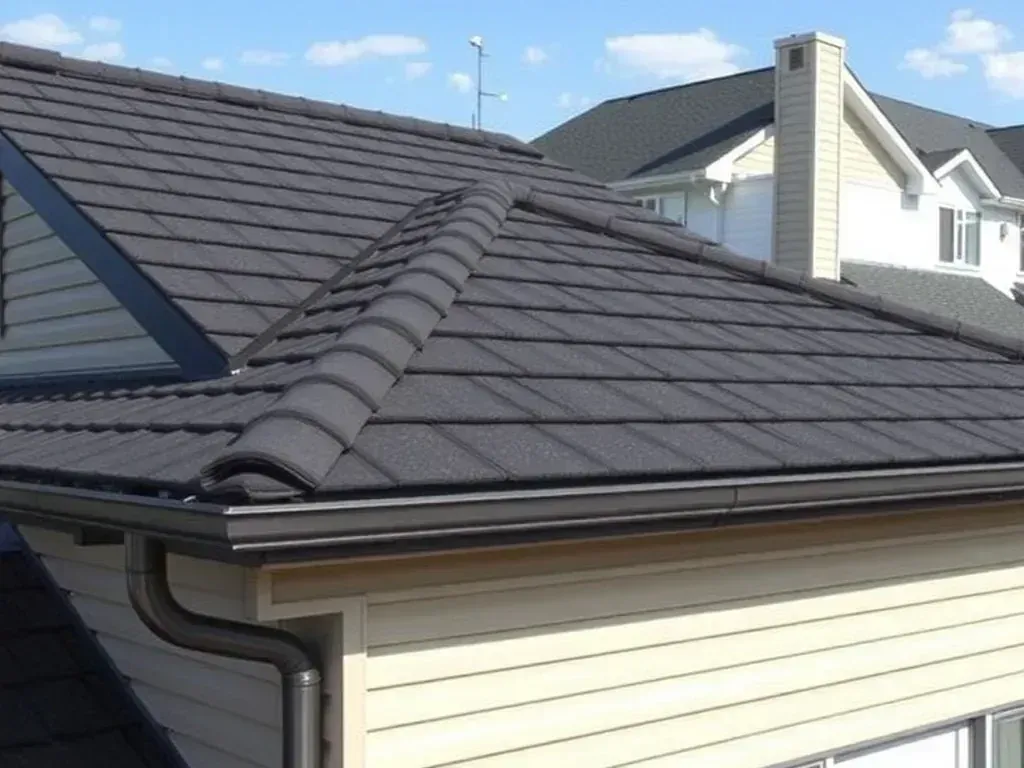
Metal roofing is a metal panel system, steel or aluminum, locked or screwed down to battens over a solid substrate of decking. On a standing-seam panel the seams are raised and mechanically folded, so no fasteners sit exposed across the field of the roof and no rubber washers dry out and crack. An exposed-fastener panel, often a corrugated panel or an R-panel, drives screws straight through the steel into purlins and counts on a neoprene washer to stay watertight.
Around Atlanta we work on Craftsman bungalows close to the city core, mid-century ranch homes with low-slope rear sections, and newer townhomes where the roofline runs mostly gable and hip. Spring hail bruises an asphalt shingle down to the mat, and the granule loss that follows leaves the bitumen wide open to UV. Humidity finishes the job. Moisture wicks into the underlayment and the decking, and rot appears at the chimney flashing long before it stains your ceiling.
Cost follows gauge, panel width, finish, and roof pitch. A PVDF finish holds color far longer than a thin SMP coating, which is the difference between a roof you replace once and a roof you keep for 40 to 50 years. Steep pitches and a lot of valley cuts add labor. We hand you a line-item roof estimate, so tear-off, underlayment, ice-and-water shield, and trim each get their own number.
Metal isn't the only answer, and we'll say so. On a low-slope addition, a membrane system like TPO, EPDM, or a PVC membrane usually beats panels, and a modified bitumen or built-up roof still makes sense on some flat sections. On the main pitched roof, homeowners weigh metal against architectural shingle, three-tab shingle, wood shake or cedar shake, slate, and clay or concrete tile. Every one of those carries a different weight, so we check the trusses, rafters, joists, and ridge beam before recommending anything heavy.
Small details decide whether a metal roof lasts. A vapor barrier belongs on the warm side of the insulation, never pressed against the decking. Roof cement and mastic get used sparingly at pipe flashing and boot flashing, not as a substitute for apron flashing or a proper counterbatten under the panel. We set an anchor for fall protection, run a roofing square over every cut, and keep a pry bar and roofing shovel moving through the tear-off.
On older Atlanta homes we still pull up tar paper and 15-pound roofing felt under the shingles, and neither one holds up the way a synthetic underlayment does. A mansard or gambrel shape changes how panels run. A canopy or awning over an entry door needs its own apron flashing and a tighter overhang, and a parapet wall on a townhome needs coping and a scupper to drain water off the rooftop.
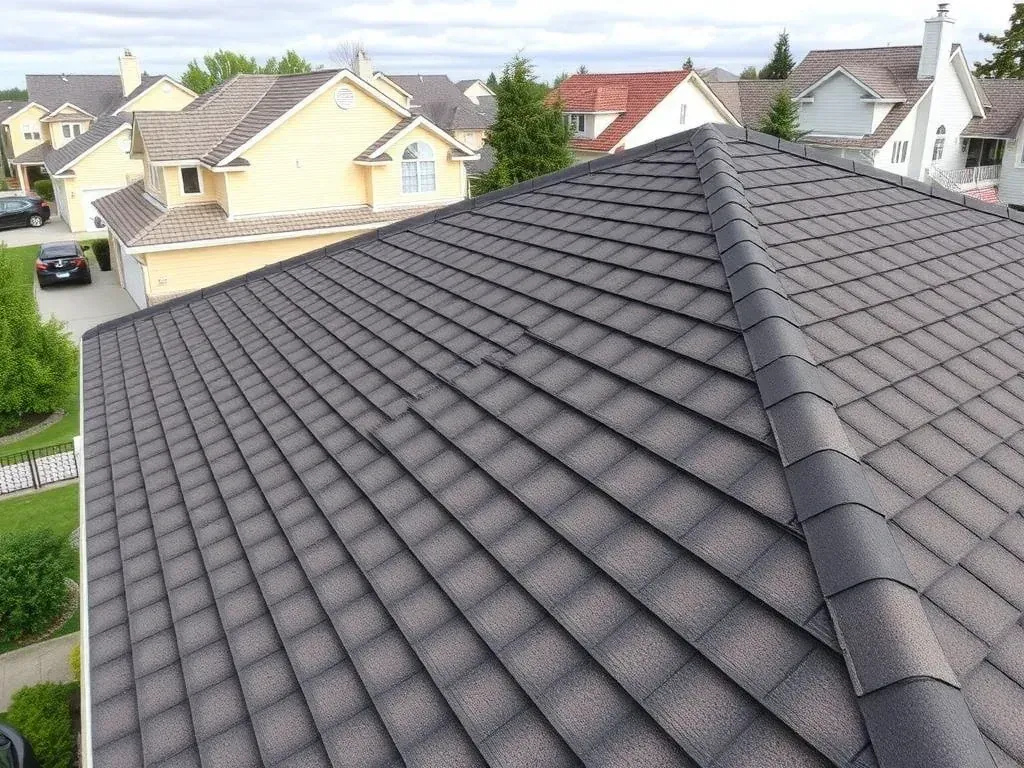
We install standing-seam steel, exposed-fastener panels, stone-coated steel, and aluminum, and we'll walk through profiles from McElroy Metal, ATAS, and Decra when you want a specific look. A light gauge suits a shed; a heavier gauge belongs over living space.
What's Included
Our Metal Roofing Process
What We Check Before We Quote Metal Roofing
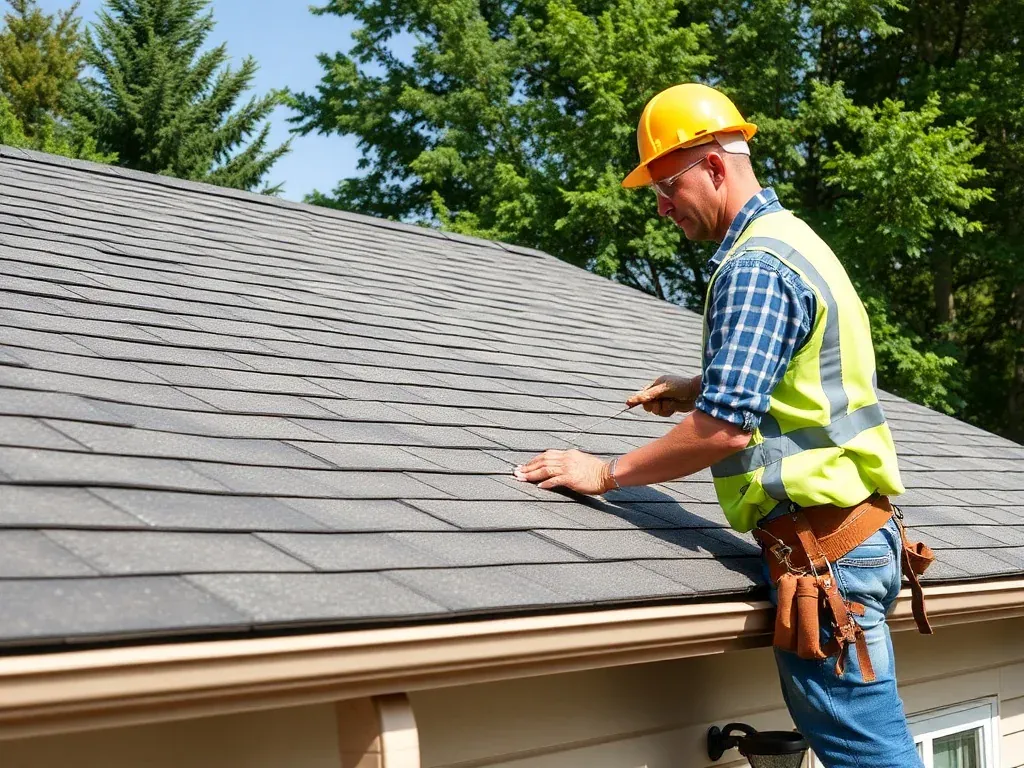
- Deck condition: we lift a few shingles or panels and press the sheathing for soft spots, because rot under a new metal panel comes back fast.
- Pitch and slope: anything below a 3:12 usually needs a membrane under the panels rather than bare underlayment.
- Fastener spacing: we measure rafter and purlin centers so screw length is correct and nothing gets overdriven.
- Flashing condition: step flashing, chimney flashing, and counter-flashing all get inspected, since that is where most leaks begin.
- Ventilation: an unbalanced ridge vent and soffit vent pair traps heat and moisture against the decking, and an attic fan can make it worse.
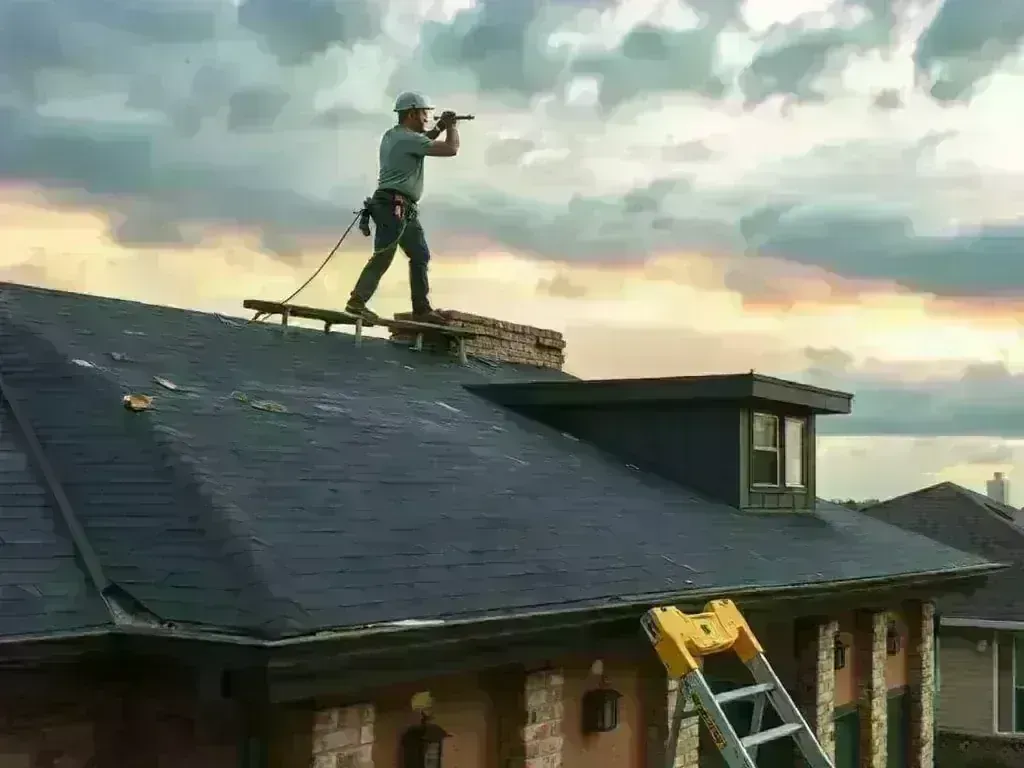
- Access and safety: where we can set a ladder, where we need scaffold, and where a safety harness is mandatory.
- Drainage path: gutters, downspouts, and any ponding water near a parapet or valley.
- Logistics: dumpster placement, driveway protection, and how long the roof stays open.
Free Inspection
We assess your roof with a thorough inspection and provide a detailed photo report — no cost, no obligation.
Clear Estimate
You get an itemized scope with materials, labor, and timeline. No hidden fees. We discuss insurance and financing options.
Expert Work
Licensed crews arrive on schedule, protect your property, complete the work, and clean up thoroughly.
Final Walkthrough
You inspect with us. We document everything with before/after photos. Warranty registered and paperwork delivered.
Signs You Need Metal Roofing
Signs Your Atlanta Roof Is Ready for Metal Roofing
- Granule loss piling up in the gutter after a spring hailstorm, which means the asphalt shingle is thinning toward the mat.
- Bruised shingles that look fine from the driveway but feel soft underfoot once hail has hit them.
- Chalking or rust streaking on an older metal roof, a sign the coating has oxidized and the panels are due for a recoat.
- Backed-out fasteners with cracked neoprene washers, which is exactly where water gets past an exposed-fastener panel.
- Rust along the cut edges of corrugated panel, especially where debris and pine straw sit against the steel.
- A stained ceiling or damp attic sheathing after weeks of humidity, which points to water wicking along a failed underlayment.
- Sagging or spongy spots near the eave, the first place rot shows up once the drip edge stops shedding water.
Metal Roofing — Frequently Asked Questions
Does metal roofing hold up to Atlanta hail?
Metal roofing handles hail better than asphalt shingle in most cases. A bruised shingle loses granules and exposes the bitumen underneath, while steel usually just dents. Heavier gauge resists denting better, and stone-coated steel hides small dents well because of the textured finish.
How much does metal roofing cost in Atlanta?
Metal roofing costs more up front than architectural shingle, and the spread depends on panel type, gauge, and roof complexity. A standing-seam panel with a PVDF finish sits at the top of the range. An exposed-fastener panel with an SMP coating sits lower. Steep pitch, dormers, and a lot of valley cuts push labor up, so we put every line in a written roof estimate.
How long does metal roof installation take?
Metal roofing usually runs two to five days on the roof once materials land, and tear-off plus deck repair adds a day on a house with rot. Custom trim and long panel runs add time. We keep the roof watertight at the end of every working day.
Will my insurance claim cover hail damage to the roof?
Metal roofing storm claims are often covered, but the claim hinges on documentation. We photograph the hail strikes, note the damage pattern, and write an insurance scope the adjuster can work from. If the first offer misses decking or flashing work, we file a supplemental claim.
Can metal panels go over my existing shingles?
Metal roofing can sometimes be installed as a recover over the old covering, which saves the tear-off cost. It only works if the sheathing is sound and the existing layers stay within what building code allows. If there is rot, or the roof already carries two layers, we tear it off.
Don't just take our word for it — hear from our satisfied customers.
"Hail bruised the old architectural shingles two springs running. Atlanta Roof Master tore it off, found two soft sheets of OSB, and put down standing-seam panels. The attic sits cooler now and I stopped calling anybody about leaks." — Marcus T., Sandy Springs
"They gave me a line-item roof estimate, so I could see exactly what the tear-off, underlayment, and trim cost. No surprises at the end, and the crew swept for nails twice before they left." — Dana R., Decatur
"Our ranch had a low-slope back section that leaked at the chimney flashing every summer. They reflashed it, balanced the ventilation, and replaced only what was actually failing. First rainy season in years with a dry ceiling." — Priya S., Roswell
Ready to get started? Call us today at 4044740372 for a free estimate.
Free estimates · Licensed & Insured · 25-year warranty
Call 4044740372